ServicesMain Water Line Replacement
Main Water Line Replacement in Nashville
When the pipe between your water meter and your home starts failing, we replace it with new copper or PEX. Every buried utility is marked before we dig, and the new line is pressure tested before the trench is closed. You get steady pressure and clean water.
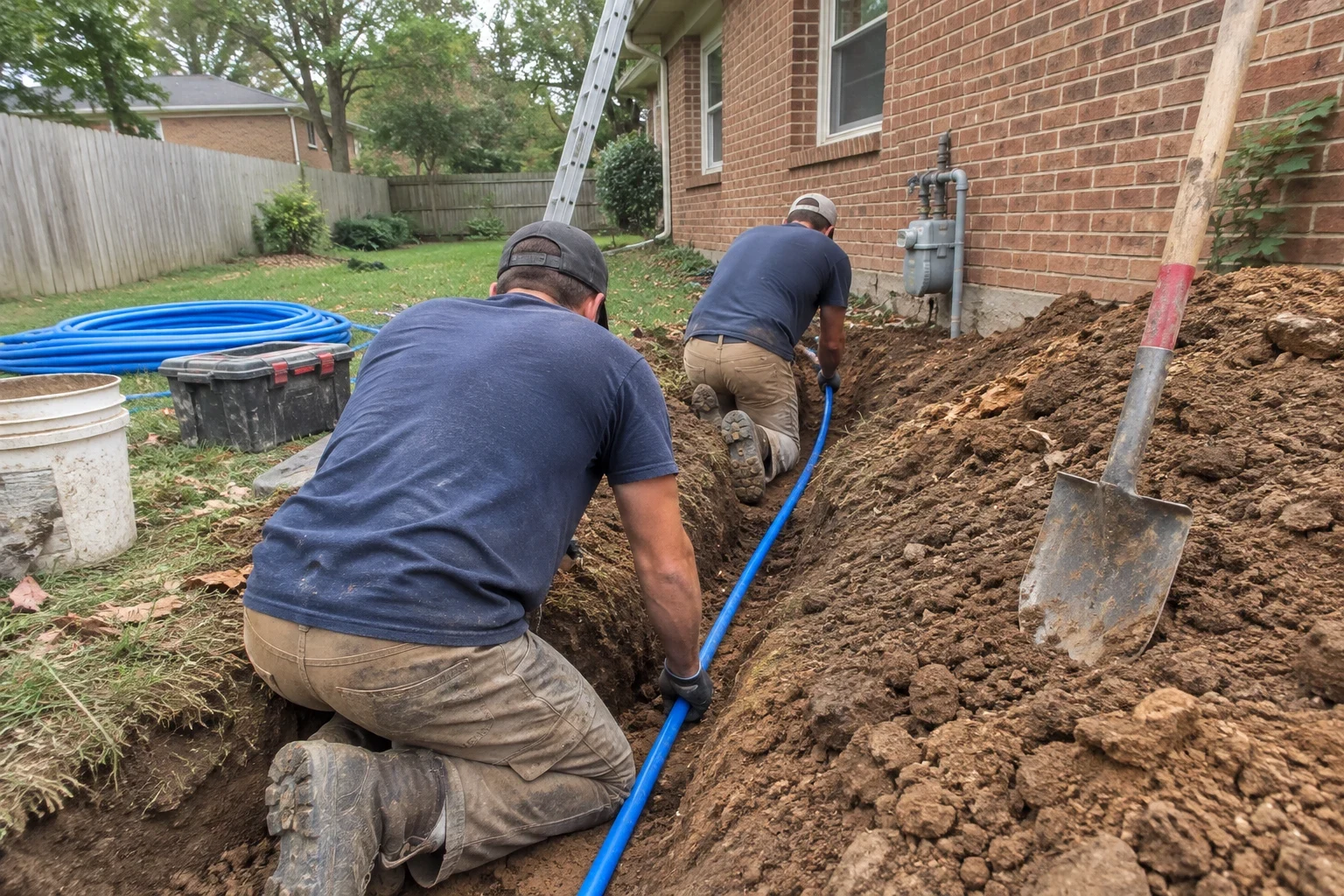
When replacing the main line is the right call
Your main water line runs from the meter near the street to the shutoff where it enters your home, and that stretch is usually the homeowner's responsibility. In older houses it is often galvanized steel, which rusts from the inside until the opening narrows to a fraction of its size. In others it is polybutylene, a gray plastic installed from the late 1970s into the 1990s that turns brittle as chlorine in the water attacks it. Neither material holds up to patching for long.
We recommend replacement when the line keeps failing, when the pipe material itself is the problem, or when pressure has dropped because the pipe is undersized or choked with scale. If one bad fitting is the only issue, we tell you so. Safety shapes how we plan the work: utilities marked before digging, a stable trench, and drinking water kept free of dirt while the line is open.
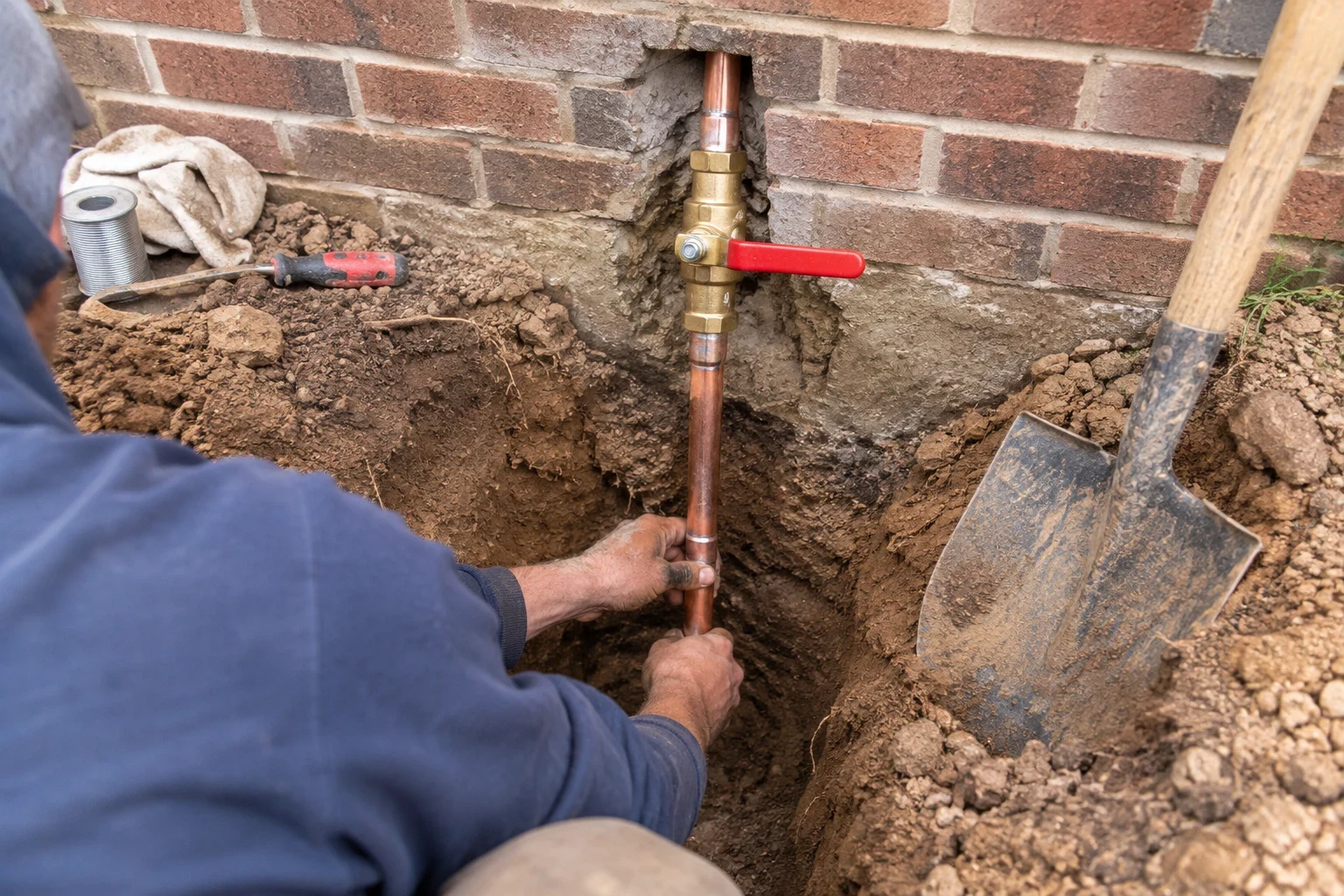
What the replacement includes
- 01
Utility locates before digging
We request Tennessee 811 locates so gas, electric and communication lines are flagged before any excavation. Near a marked line we dig by hand instead of trusting a machine bucket.
- 02
New pipe sized for your home
Most lines are replaced with 1-inch Type K copper or PEX rated for direct burial. Moving up from an old 3/4-inch line often restores pressure at upstairs showers and when two fixtures run at once.
- 03
Open trench or trenchless
A clear yard usually gets a straight trench. Under driveways, sidewalks or tree roots, we can use pipe bursting or directional boring to pull the new line through from small access pits.
- 04
A main shutoff that works
We connect at the meter side and inside your home at a new full-port ball valve. Old gate valves tend to seize half-open, so we replace them rather than leave you without a reliable way to stop the water.
- 05
Pressure test and flush
The new line holds test pressure while we check every joint. Then we flush it so sand and cutting debris never reach your faucets, toilets or water heater.
- 06
Backfill and cleanup
Soil goes back in compacted layers so the trench does not sink into a ditch a month later. We rake out the area and haul off the old pipe.
Questions about Main Water Line Replacement?
Call(615) 560-9798Signs your main water line needs replacing
Pressure that keeps dropping
Weak flow at every fixture, not just one, points to the line feeding the house. Galvanized pipe loses pressure slowly as scale builds inside it.
A soggy strip in the yard
A wet line between the meter and the house, or grass that stays green through a dry spell, often marks water escaping from the buried pipe.
Rusty or brown water
Discolored water first thing in the morning, or after the water has been off, is a common sign of corroding steel pipe.
Gray plastic at the shutoff
If the pipe entering your home is gray, flexible plastic, it is likely polybutylene. It can split without warning, so planning replacement beats waiting for the break.
A bill that climbs for no reason
Higher water use with no change in your habits can mean water is being lost underground before it reaches the house.
How a replacement job runs
- 1
Inspection and free estimate
We check static pressure at a hose bib, identify the pipe at the meter and at the house entry, and walk the route. You get a written estimate that names the method, the pipe material and each part of the job.
- 2
Permit and locates
We pull the plumbing permit and schedule utility marking. Digging does not start until every flagged line is accounted for.
- 3
Shutoff and installation
We tell you ahead of time how long your water will be off. Then we cut out the old line and install the new one, keeping open pipe ends capped so soil cannot get into your drinking water.
- 4
Test, inspect and restore
The line is pressure tested and, where the permit calls for it, inspected before backfill. We restore water, bleed air from your fixtures and check for sediment before we leave.
What moves the price of a main line replacement
Every service line takes its own path from the meter to the house, so we set the price only after walking that path with you. The estimate costs nothing and lists each part of the job on its own line. Payment can be made in cash or with any major credit card, and financing options are available if you would rather spread the cost out.
- Run distance and burial depth
- A house set well back from the street needs more pipe and a longer trench. A line buried deeper takes more time to uncover, bed and backfill.
- What sits in the way
- Driveways, patios, mature trees and retaining walls change which method fits. Limestone and heavy clay, both common around Nashville, slow trenching considerably.
- Pipe material and size
- Copper and PEX differ in material cost and in how they are joined. Upsizing the line adds some cost but often fixes long-standing pressure problems.
- Trenchless or open trench
- Boring or bursting costs more in equipment but can save expensive repairs to concrete and landscaping. We show you both options when both fit the site.
- Permit and surface repair
- Permit fees and the extent of lawn or hardscape restoration are listed separately so you can see where the money goes.
Main water line questions
Is the water line my responsibility or the utility's?
In most cases the water provider is responsible for the meter and everything between it and the main in the street. The pipe running from the meter to your home usually falls to the homeowner. The exact dividing point can differ from one provider to another, so we confirm it while we do the estimate.
Will my yard be torn up?
An open trench leaves a narrow strip of dug soil from the meter to the house, which we backfill in layers and rake level. The grass along that strip usually needs seed or sod afterward. If the route passes under a driveway or plantings you want to keep, a trenchless method limits the digging to a couple of small access pits.
Is copper or PEX better for a buried line?
Either one makes a good service line. Type K copper is stiff, long-lasting and tolerates rocky backfill, though the material costs more. PEX bends with shifting soil and does not build up scale, but it has to be bedded in clean sand so sharp stone cannot rub through it. We pick based on your soil and the route the line takes.
Could my old line contain lead?
Houses built before the mid-1900s sometimes still have a lead service pipe, and older copper lines can have lead solder at the joints. Lead pipe looks dull gray, feels soft and shows a bright silver mark when you scratch it. If we find it, we show you and take it out along with the rest of the old line.
What if the line breaks at night?
We offer 24/7 emergency plumbing service. If water is pooling in the yard or entering the basement, close the main shutoff inside your home if you can reach it safely, and stay away from standing water near outlets or electrical equipment. We make the site safe first, then plan the replacement with you.
Find out what is running under your yard
We will test your pressure, identify the pipe and tell you plainly whether replacement makes sense. If the line has already broken, our 24/7 emergency plumbing service is on the same number.